
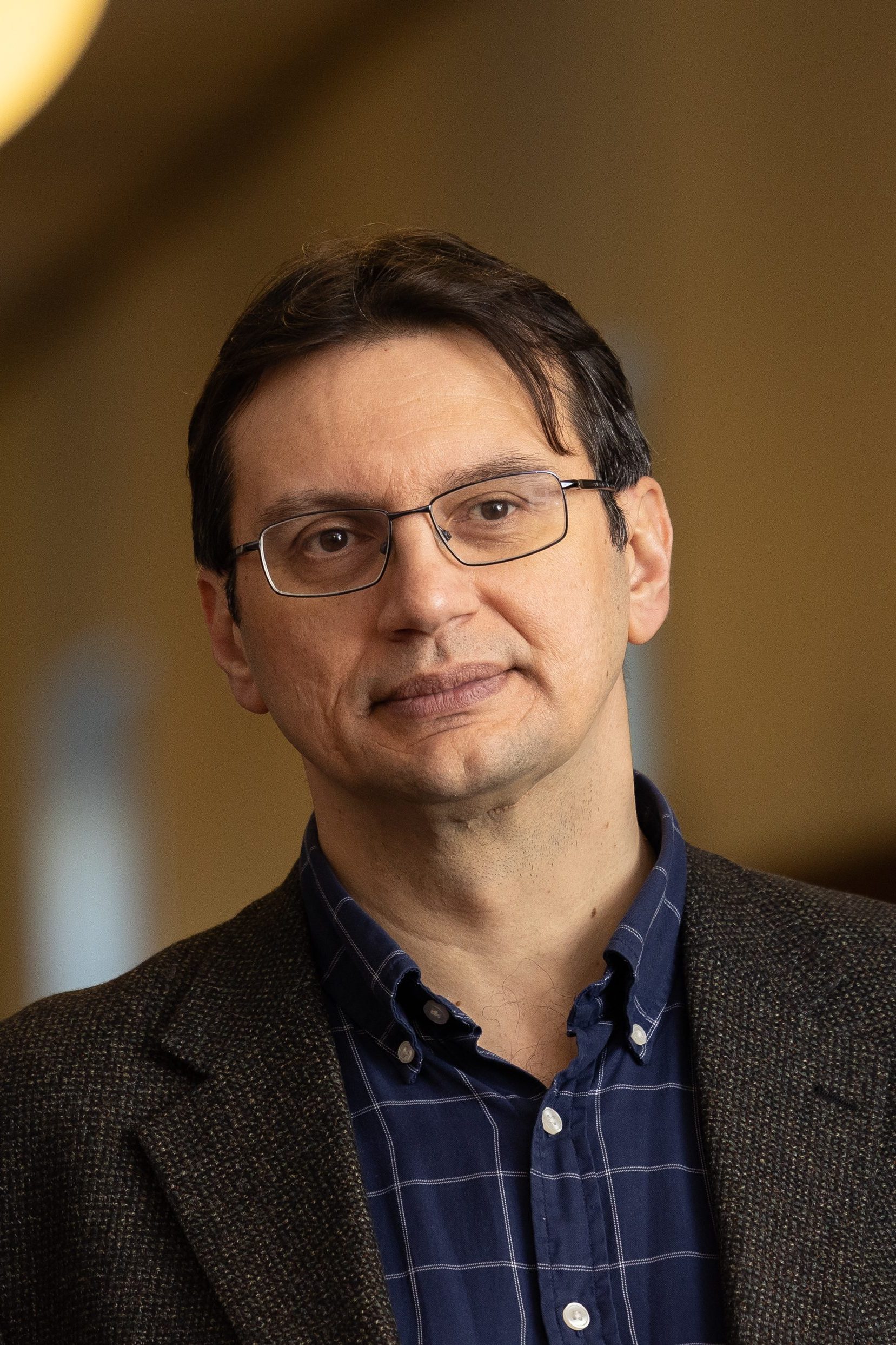
Sorin Bangu
(University of Bergen)
Rule-following and Rule-breaking: How is Scientific Creativity Possible (in the Age of AI)
Abstract:
Few notions are more important and yet less understood than scientific creativity. In this talk, I aim to take some steps toward articulating a philosophical model helping us make better sense of the creative aspect of science (and mathematics). The model builds on Margaret Boden’s distinction between combinatorial and transformational creativity (Boden 2004; 2014), and integrates Feyerabendian insights about his so called ‘epistemological anarchism’, as well as the ‘paradox’ of rule-following (that Kripke claimed to find in Wittgenstein’s Philosophical Investigations). However, I propose somewhat different accounts of both the combinatorial and the transformational kinds of creativity, where these modifications are suggested by reflections on several episodes in the history of science (and mathematics). Importantly, the model doesn’t presuppose (nor entails) that creativity is an exclusively human ability, so it allows us to consider the possibility, and hope, that AI systems (the current LLMs or of other type) could, and will, find creative solutions to outstanding scientific problems. I shall argue that although the model doesn’t apriori rule out this possibility, and hope, it also gives us a sense of how we should recalibrate such expectations.
Biographical information:
Sorin Bangu is Professor in the Philosophy Department, University of Bergen, Norway. He received his PhD from University of Toronto. His main interests, and publications (including two books), are in philosophy of science (especially philosophy of physics and mathematics) and history of analytic philosophy (on Wittgenstein and Quine).
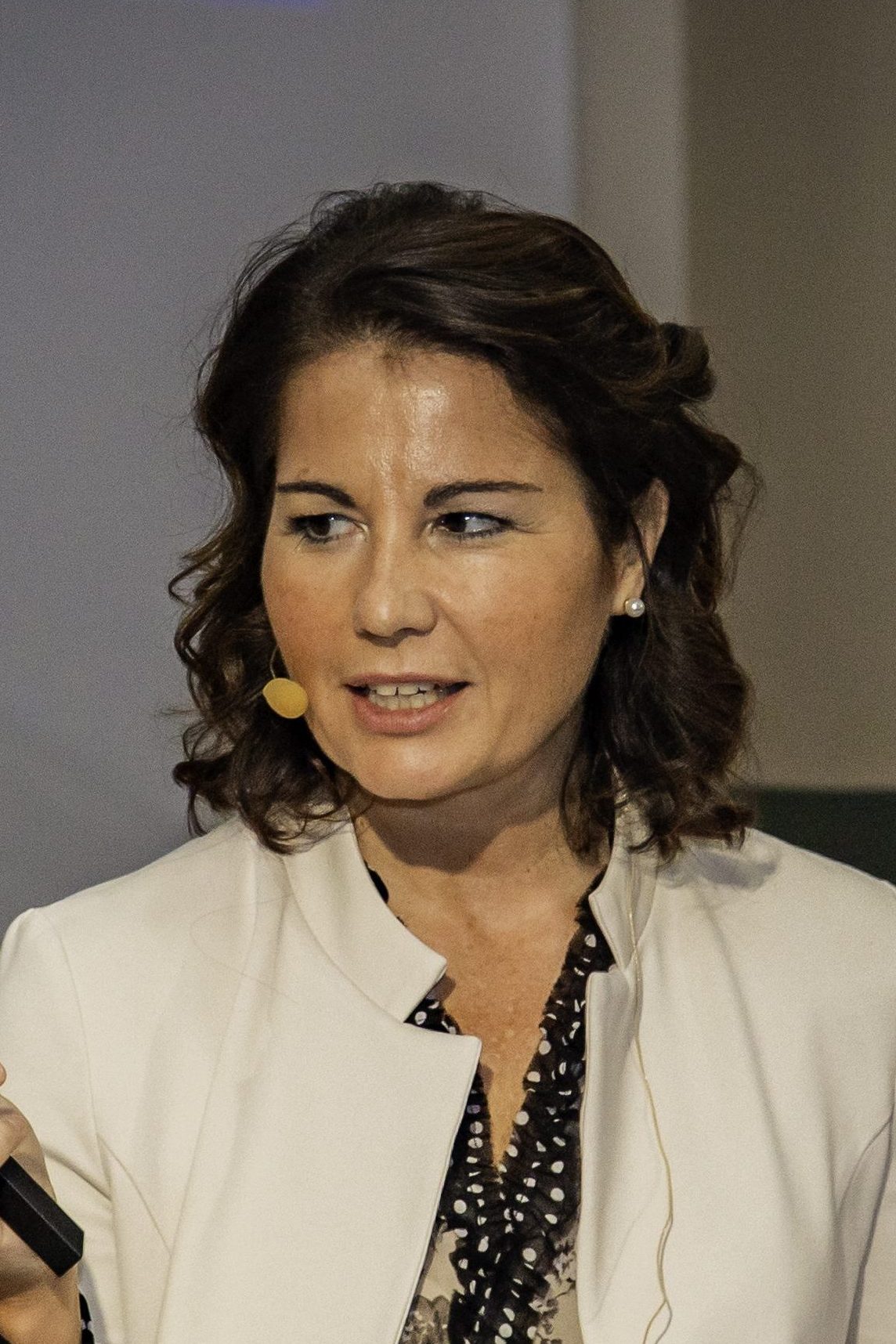
Marta Bertolaso
(University Campus Bio-Medico of Rome)
Shared Agency in Model-Based Reasoning
Abstract:
Shared agency (SA) has emerged as a pivotal conceptual construct in the modelling of Human-Robot Interaction (HRI). The framing of the systems and the models setting, however, are arising different epistemological concerns that span from explanatory issues to models and theories compatibilities.
In the first part of the paper, I present a systematic review of three dominant perspectives that structure current scientific practices in the HRI field.
The Cognitive Perspective enquires agency primarily in terms of goal alignment: SA is understood as the congruence between predicted and observed sensory outcomes, where reciprocity in HRI is modelled as a feedback loop oriented toward prediction-error minimisation. The Embodiment Perspective frames agency as bodily extension, the dynamic integration of robotic artifacts into the body schema, resonating with epistemological questions already discussed in the philosophical literature on systemic and context-dependent frameworks of cognition. The Engineering Perspective treats agency as a design variable to be optimised within control architectures: consistent with informational theories, error minimisation constitutes a typical success parameter, with zero error and full assistance often functioning as the design ideal, and SA operationalised as a parameter of system performance.
I will argue that the most significant epistemological tension among these models emerges, however, from examining the specific role that SA plays in the different explanatory accounts. For the Cognitive and Embodiment perspectives, SA functions as an a priori explanatory tool, a conceptual framework deployed to account for feedback loops and bodily coupling in HRI. For the Engineering perspective, SA instead becomes a constitutive part of the explanandum: the specific dynamic under investigation, understood in terms of the reciprocity of interactions between humans and robots as it is actually enacted.
I will conclude that a relational epistemology, one that takes the human-robot-environment assemblage rather than any single component as its primary unit of analysis, offers a productive path for disentangling these tensions and making the most of the scientific practices they generate.
Biographical information:
Marta Bertolaso is Full Professor of Logic and Philosophy of Science and Head of the Research Unit of Philosophy of Science and Human Development at the University Campus Bio-Medico of Rome. Her expertise in philosophy of science, scientific practice and in philosophy of the life sciences has allowed her to promote and collaborate in interdisciplinary research and educational projects on complex organized and adaptive systems and human-environment interactions also mediated by the digital technologies. Among other commitments, she is ordinary member of the Académie Internationale de Philosophie des Sciences (https://www.aips.be/en), member of the Consulta Italiana di Filosofia (https://www.consultanazionalefilosofia.it/chi-siamo/), member of the national coordination group Bioeconomy within the CNBBSV: https://cnbbsv.palazzochigi.it/it/materie-di-competenza/bioeconomia/, Camartis President (www.camartis.net), Editor in Chief of Springer Series Human Perspectives in Health Sciences and Technology and of Rubettino Series Fattore Umano e Complessità. She is author of more than 130 publications listed inhttps://unicampus.academia.edu/BertolasoMarta/CurriculumVitae.
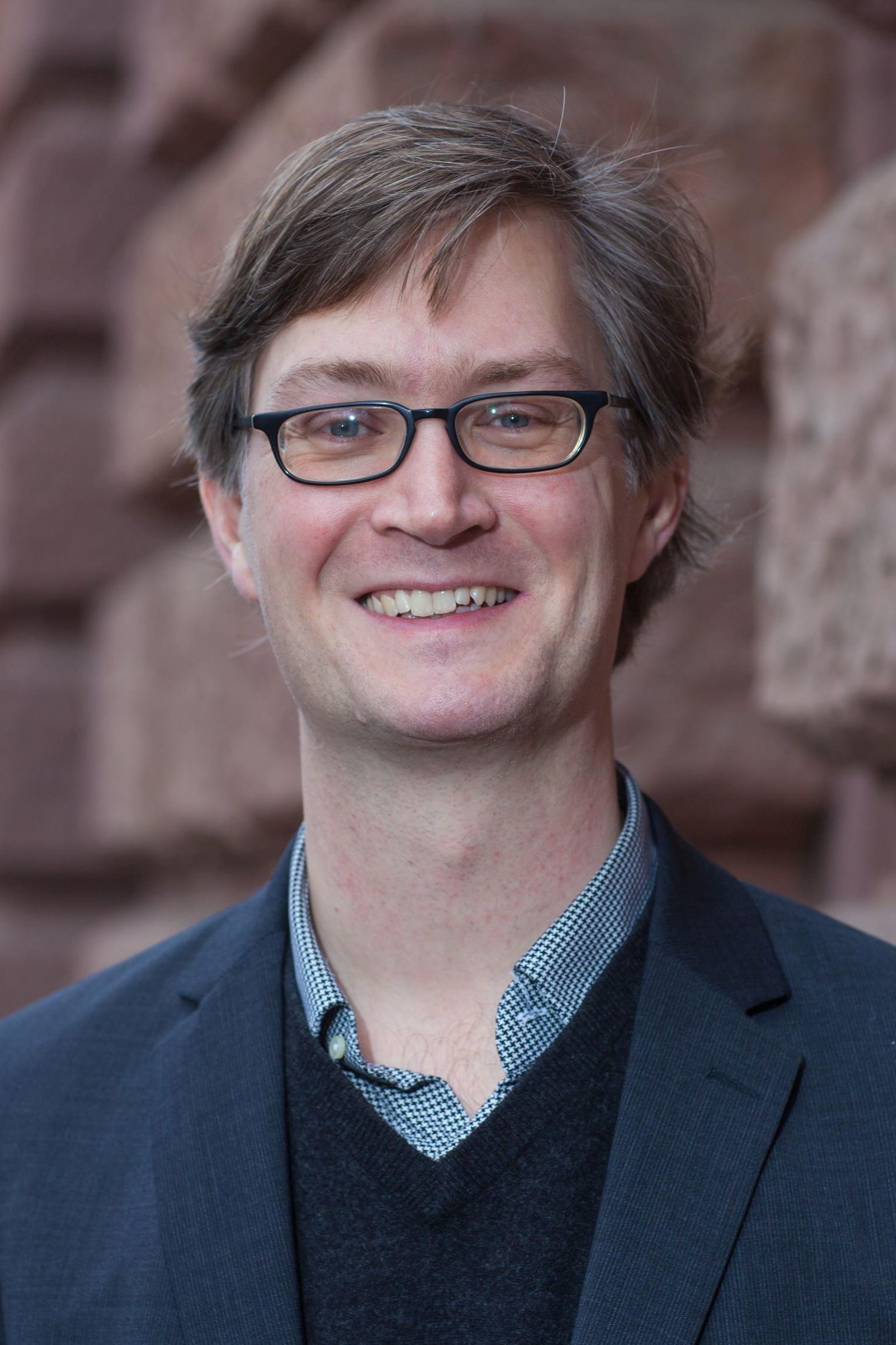
Axel Gelfert
(Technical University of Berlin)
When Models Trespass
Abstract:
Models are ubiquitous in science; they function as both representational devices and epistemic tools. We routinely turn to them for scientific understanding and answers to scientific questions. While it would be fanciful to attribute agency to them, we often treat them as informants on complex matters, and like informants they are reliable only within a certain domain. Problems arise when models trespass beyond their legitimate domain of application. In this keynote, I will outline conditions for when models trespass and highlights some of the epistemic pitfalls and non-epistemic risks associated from such an overextension of models.
Biographical information:
Axel Gelfert is Professor of Epistemology and Philosophy of Science at Technische Universität Berlin. He has worked extensively on the philosophy of scientific models, in particular the role of exploratory modeling, on social and political epistemology (esp. fake enws and scientific hoaxes), and on the history of philosophy. He is the author of two monographs, A Critical Introduction to Testimony (2014) and How to Do Science With Models (2016), co-author (with S. John and M. Frisch) of Communicating Scientific Knowledge in Times of Crisis (2025), and has edited a number of special issues and edited volumes. Since 2022 he has been the President of the German Society for Philosophy of Science (GWP).
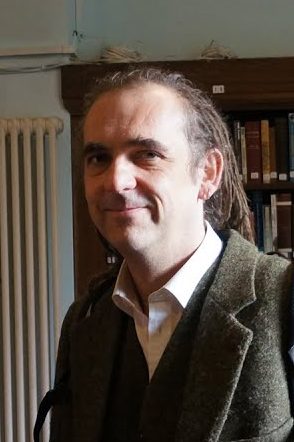
James Ladyman
(University of Bristol)
The Limits of Pluralism and Realism
Abstract:
Models are the subject of a vast literature in philosophy of science, and there are different accounts of their nature, and how they represent real systems, and different accounts of scientific representation in general (Hesse1963, Cartwright1983, vanFraassen 2008, Frigg and Nguyen 2020). Some philosophers deny or downplay the representational role of models (for example, Knuuttila2003 who regards them as epistemic artefacts). Van Fraassen argues that models only represent given an agent with a purpose. Nonetheless it is widely agreed that models are sometimes representations of real phenomena and systems, even if that is not their primary role, and even if they do not represent independently of being used to do so if at all. Furthermore, there is much more that can be said about models and scientific representation about which philosophers of science agree, or should agree according to this paper. One crucial issue that still divides realists and antirealists is the whether models represent causal structure or mechanisms. This paper considers the implications for pluralism and realism of the fact that successful modelling involves empirical adequacy that is always to some degree of precision and always involves phenomena in some domain or at some scale.
Biographical information:
James Ladyman is interested in most areas of philosophy, but his work is primarily in general philosophy of science, philosophy of physics, history and philosophy of chemistry, philosophy of mathematics, philosophy of computation and artificial intelligence, and the relationship between biology and physics. His best-known work is on structural realism (in his 1998 paper he introduced the distinction between epistemic and ontic forms of structural realism, and he has defended the latter), as well as on complex systems. He is also interested in the impact agenda and science policy, and in understanding the epistemological and broader implications of AI and big data technologies for science and society.

Lorenzo Magnani
(University of Pavia)
Beyond Stochastic Parrots – The Jeopardy of Human Creativity in the Age of Cynical AI Ethics
Abstract:
This intervention builds on the paper Enhancing or Jeopardizing Human Creativity? Will Humans Be Able to Defend Themselves Against AI Superpowers in an Age of Ethics Washing and Law Washing? (Magnani, 2026) and examines the epistemic threats posed by Large Language Models (LLM models). It asks whether human creativity can still be protected when these AI systems, now acting as “Superior Masters of the Symbolic”, are deployed under the dominant regime of “ethics washing” and “law washing”
The paper argues that academic AI ethics almost always ideology in its purest, most cynical form today. It is not hypocrisy; it is cynical reason – we all know very well that the principles have no teeth, yet we continue to act as if they matter. This cynical reason, in the age of ethics and law washing, produces only performative moral theater while corporations and states race ahead without any real acts of a “violent arm of the law”. The emptiness of the discourse is not accidental — it is the function of the system perpetrated by corporations and submissive or ineffective parliaments. It keeps the system lubricated.
Drawing on my eco-cognitive framework, the talk shows how LLM models, as Superior Masters of the Symbolic, risk turning human reasoners into passive consumers of pre-fabricated inferences, thereby jeopardizing human specific abductive creativity. It wraps off by describing defensive tactics based on a revitalized epistemology that can take on AI superpowers.
Biographical information:
Lorenzo Magnani is a philosopher, epistemologist, and cognitive scientist at the University of Pavia, Italy. He is a professor of Philosophy of science and Artificial Intelligence and knowledge, and has been a visiting researcher and professor at various universities in the US and China. Member of the International Academy for the Philosophy of the Sciences (AIPS), his recent books, Eco-Cognitive Computationalism and Discoverability, offer new perspectives on computation and human creativity. He has recently edited the Handbook of Abductive Cognition and the Springer Handbook of Model-Based Science, and is the editor-in-chief of the Book Series SAPERE (Studies in Applied Philosophy, Epistemology, and Rational Ethics).

Patricia Palacios
(University of Salzburg)
Modeling instability: From ecological collapse to political transitions
Abstract:
Minor perturbations can occasionally set off cascading effects that lead to abrupt shifts in ecological and political systems; such shifts are often described as ecological and political tipping points. Examples are the collapse of fishery in coral reefs caused by the addition of a small number of predator fish or political revolutions triggered by apparently minor factors, such as the increase of a few cents in the metro ticket. Although these shifts are extremely hard to predict and cannot be fully captured by mechanistic models, some characteristics consistently emerge as indicators of the kinds of instabilities leading to abrupt transitions. While some indicators, such as positive feedback and volatility are more generic, others, such as preference falsification and homophily, are specific of sociopolitical systems with no analogue on ecological systems. In this talk, I will stress the analogies and disanalogies between ecological and political transitions and the consequences for model building. I argue that the most promising way to apply mathematical theories of ecological tipping points —such as bifurcation theory or theories of criticality—to the political case is to construct new models that integrate universal features of critical transitions with features that are distinctive to the political domain. This, in turn, will guide us toward a new framework of model transfer, which I call “model adaptation.’’
Biographical information:
Patricia Palacios is an Associate Professor in philosophy of science at the University of Salzburg. Her research focuses on emergence, reduction, the role of idealizations in scientific modeling, and the application of the physics of statistical mechanics to other disciplines, especially economics and biology. In her recently awarded ERC-Grant “MACBeh,” she investigates the use of the physics of phase transitions in modelling collective behavior in economics and social sciences. She is particularly interested in understanding why and to what extent we can use the same formalisms in a variety of disciplines.

Demetris Portides
(University of Cyprus)
The function of Abstractions and Idealizations in Scientific Models and Scientific Understanding
Abstract:
Several pragmatically oriented approaches to the notion of scientific understanding rest on the observation that scientific models are constructed using abstractions and idealizations. Since abstractions and idealizations deviate from truth, the models they give rise to lead to false claims about worldly systems. Since false models cannot contribute to truth but do facilitate scientific understanding, scientific understanding is not necessarily connected to truth. A robust version of this argument leads to the claim: Since model representations of wordly systems are ubiquitous in scientific practice and since they cannot lead to truth, scientific understanding is a primary scientific aim that displaces or outplaces the scientific aim of truth.
I raise two concerns with the robust version on grounds that I shall motivate in my talk. The first relates to how the representational relata are conceived and the second relates to the inclusion of abstractions and idealizations within the general category of “falsehoods” without further qualification. I briefly elaborate on the first concern here. The robust pragmatic argument is based on an understanding of the relata as follows: a theoretical scientific construction, i.e. a model, is meant to represent a particular concrete target system in the world. If such were the case, then the argument for displacing truth could be sound. But, I think the facts of the matter are far more complex. Scientific models involve some level of generality that makes them inaccurate representations of concrete worldly systems. For instance the linear harmonic oscillator, LHO, is meant to represent only the effects of a linear restoring force. Similarly the simple pendulum is only meant to represent a linear restoring force acted upon by gravity and a tensional force by a string attached on a body. To claim that LHO is false, because it does not represent accurately and precisely the behavior of an actual concrete oscillating body, or to claim that the model of the simple pendulum is false, because it does not represent accurately and precisely the behavior of an actual grandfather’s clock, is to overlook their purpose, which is to represent only the effects of a linear restoring force. Scientific models most often represent theoretical types (or generalized phenomena), and their truth-valuation is not something that could be determined in a straightforward way by correspondence to the world. Truth (if plausible) in science is related to the level of generality of models. Therefore, the claim that the epistemic aim of scientific understanding outplaces the epistemic aim of truth is farfetched.
Biographical information:
Demetris Portides is Professor of Philosophy at the University of Cyprus and a member of the International Academy of the Philosophy of Science. His research focuses on the analysis of the nature and structure of scientific theories, on the relation between scientific models and scientific theories, on the functions of scientific models, and on the processes of abstraction, idealization and approximation in science. He teaches at the University of Cyprus inter alia courses in Philosophy of Science, Logic, Philosophy of Religion, British Empiricism. He has co-authored the book (in Greek) Formal Logic: The Structure of Argument, (2007) Athens: Nefeli Publications. He has published scientific papers, on the aforementioned topics, in scientific journals and collective volumes.

Viola Schiaffonati
(Politecnico di Milano)
Towards the new sciences of the artificial: the role of Patrick Suppes’ philosophy of science
Abstract:
One of the key roles of philosophy of science is dealing with the philosophical foundations of scientific disciplines, that is to elicit and analyse the basic notions and concepts at the roots of a discipline. In this talk I will focus on the foundations of the artificial sciences (notably Artificial Intelligence but not only) inspired by some ideas of Patrick Suppes’ philosophical approach. First, I will discuss why we need to lay down the foundations of new sciences of the artificial, partly in continuity and partly in discontinuity with Herbert Simon’s seminal work. Second, I will outline some of the overarching themes of Suppes’ philosophy of science and use them to set the foundations of the new sciences of the artificial in a programmatic way. Third, I will illustrate the profitability of taking inspiration in this endeavour from Suppes’ contribution. While Suppes’ work has shaped much of current philosophy of science, his contributions are not often discussed. In this respect, my talk aims at illustrating and concretely using them in setting out the research agenda of the new sciences of the artificial. In particular, I will focus on Suppes’ bottom-up approach and his pluralist and pragmatist stances; on the centrality of models and their hierarchies; on the role of uncertainty and the crisis of the universality of methodological standards.
Biographical information:
Viola Schiaffonati is Professor of Logic and Philosophy of Science at the Department of Electronics, Information and Bioengineering of Politecnico di Milano. Her current research focuses on the epistemological, methodological, and ethical aspects of AI, ML, robotics. She is external faculty member of the Diplomatische Akademie in Vienna and has been visiting professor at TU Wien, Università di Pisa and Friedrich-Alexander-Universität Erlangen-Nürnberg. She has been senior Digital Humanism Fellow at IWM in Vienna, Ermete Fellow at the University of Stuttgart, visiting scholar at TU Delft, Stanford University, and University of California Berkeley. She serves as the director of the national laboratory of Informatics and Society of the Italian National Consortium of Informatics, as co-chair of the steering board of the forum of Philosophy and Engineering, as Associate Editor of the journal Science and Engineering Ethics, and as a member of the steering committee of the Italian Association for Logic and Philosophy of Science.

